Generator Repair and Service in Naperville
Won't start, showing a warning light, or skipped its weekly run? We connect you with a local, licensed and insured installer who diagnoses and repairs residential standby generators of every major brand — and tells you what it is before you pay for parts.
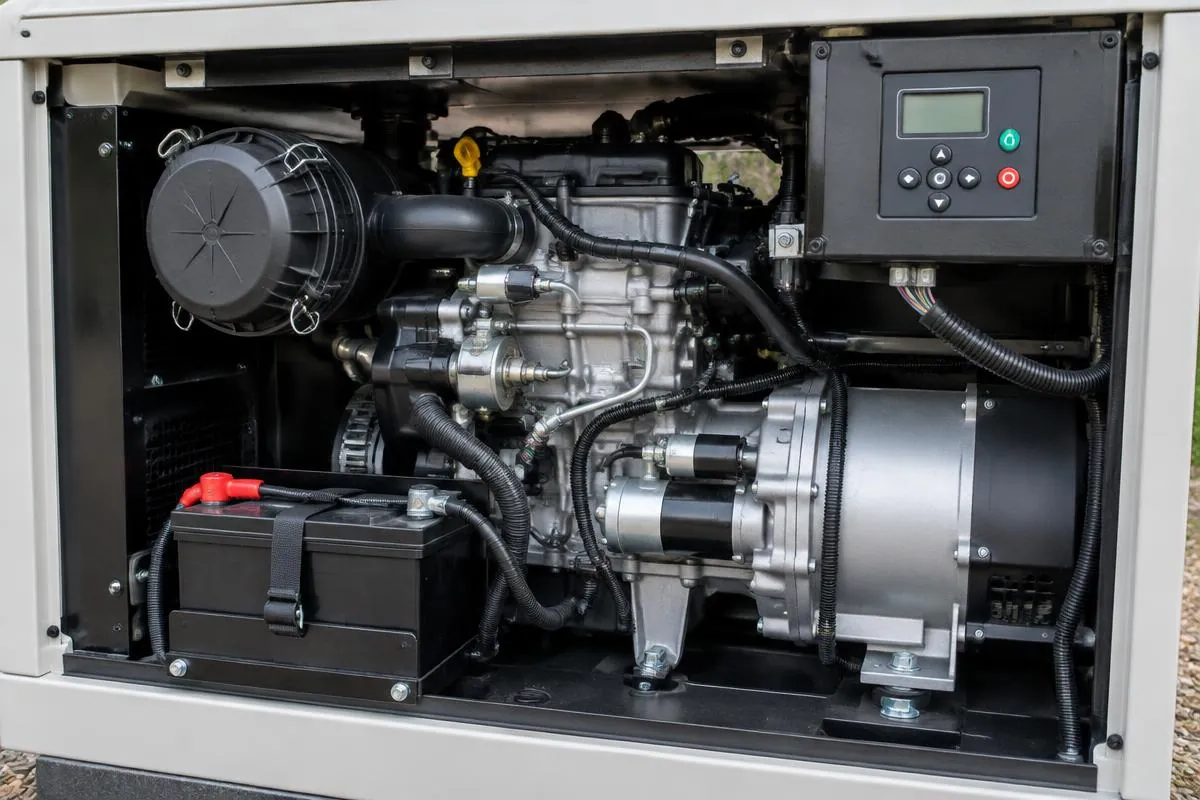
The generator won't run
Call first. Don't wait on a form.
If the unit didn't come on, came on and died, or the house never transferred, phone us before anything else. We'll connect you with a local installer who can ask the two or three questions that often solve it on the spot — and if it can't be, tell you when they can be there and what to do in the meantime.
(630) 349-2012Have these ready when you call
- The model number on the unit's nameplate
- Any code or message on the controller display
- Whether the generator itself started during the outage
- Whether the house transferred to generator power
- The last date you heard it run on its own
Common problems, fixed
Most breakdowns are one of these. Tell us which one it looks like and the installer brings the right parts on the first visit.
Won't start
Nothing happens when it should kick on, or it cranks slowly and never catches. Battery, fuel, or a controller that's locked out — the installer tests all three rather than guessing.
Tell us whether you hear anything at all when it tries to run.
Warning lights and fault codes
A red or yellow light, or a code on the controller display, is the unit telling you what it thinks went wrong. Write it down before the installer arrives — it usually cuts the visit in half.
Photograph the display. The code and the unit's model number both help.
Failed weekly exercise runs
The unit is supposed to run on its own every week or two. If it skipped, started and died, or ran rough, that's a warning you get before the outage that would have needed it.
Note the last date it ran and whether anyone in the house heard it.
Battery issues
The most common reason a standby generator doesn't answer. A weak battery can still click and crank but never reach start speed, and the charger can fail quietly for months before that.
If it cranks slowly, say so — that points straight at the battery and its charger.
Transfer switch didn't move the house over
The generator is running but the house is still dark, or the house never came back when utility power returned. That's a switch, control-signal or wiring problem, and it's the one that makes a working generator useless.
Tell us whether the generator itself started during the outage.
Fuel, regulator and gas supply
A unit that starts then dies, or runs rough at load, is often starved: a regulator out of spec, a line that got pinched or kinked, or a meter that can't feed it. Gas work gets tested, not assumed.
If you smell fuel, leave the area and call from outside.
Running rough, surging or shutting down
It runs but the lights flicker, the RPMs hunt, or it quits once the furnace and AC come on. Usually a load, fuel or governor problem — sometimes a component at the end of its life.
Say which loads were on when it happened.
Rodents, debris and weather damage
Mice nest in generator enclosures and chew harnesses; leaves and grass clippings block airflow; ice and storm debris crack louvers and fan blades. The installer opens the unit and looks, because these hide.
Mention if you've seen droppings or nesting material near the pad.
Two minutes of safe checking
A meaningful share of "it won't start" calls are a setting or a supply, not a failure. Work down this list, and call us the moment anything on it surprises you.
- 1Confirm the controller is set to AUTO, not OFF or MANUAL. A bump from a mower or a hand during the last service is a common culprit.
- 2Read the display and write down any code or message. That single detail tells the installer which parts to bring.
- 3Check the gas: is the shutoff at the unit fully open, and is the tank or service supplying fuel?
- 4Look at the battery terminals for corrosion or a cable that's come loose — without touching anything inside while the unit is running.
- 5Make sure the unit has clear airflow: no snow, leaves, tarp or box against the louvers.
- 6Don't keep cranking it. Several long start attempts in a row can flood the engine and turn a small repair into a bigger one.
Don't do any of these
- Don't open the enclosure while the unit is running or hot.
- Don't spray starting fluid or any aerosol into the intake.
- Don't reset a locked-out controller over and over to force a start.
- Don't run a portable generator inside the garage to bridge the gap — that's a carbon monoxide emergency, not a fix.
Smell fuel or hear something loud?
Leave the area, keep everyone away from the unit, and call from outside it. Then call us. Fuel and electrical faults on a running machine are not a DIY diagnosis.
(630) 349-2012Repair and service for all major brands
Standby generators are a small, mature industry and the failure modes rhyme across manufacturers. The installers we match you with work on every major brand, including units they didn't install.
- The installers we work with repair and service all major brands of residential standby generator, including Generac, Kohler and Cummins.
- They work on units they didn't install. Who put it in has no bearing on whether it gets fixed.
- The installers we connect you with are independent local contractors, not dealer agents for any manufacturer — which means the recommendation is about your unit, not a brand quota.
- If a part isn't worth replacing, the installer will say so and tell you what the alternative costs, rather than patching a dying machine.
What a repair visit looks like
Four steps, and the price comes before the work — not after.
Call and describe it
Model, what it's doing, any code on the display, and whether the house transferred. The installer will tell you what they'd check first and when they can be out.
Diagnose on site
Controller and codes, battery and charger, fuel pressure and regulator, spark and compression as needed, the transfer switch and its control signal, and the wiring.
Written price before work
You get the cause, the part or parts, the labor, and what it costs — before anything comes apart further. If the honest answer is 'this unit is finished,' you'll hear that instead.
Repair and full test
Fix it, then run it under real load and cycle a complete transfer: off on simulated outage, back on when power returns. A repair isn't done until the house has moved both directions.
A repair that isn't tested is a guess. The installer cycles a full transfer before leaving — the house off to generator power and back — so you find out that it works from them, not from the next storm.
Not running? Call now.
Tell us the model, what it's doing, and what the display says. We'll match you with a local installer who talks you through the safe checks, finds the cause and gives you a written price before any work starts.
More to read
- Standby generator maintenance — what a yearly service covers and why most breakdowns trace back to a missed one.
- Standby generator questions, answered — batteries, exercise cycles, noise and servicing units installed by someone else.
- Contact us — send a request if you'd rather write than call.